
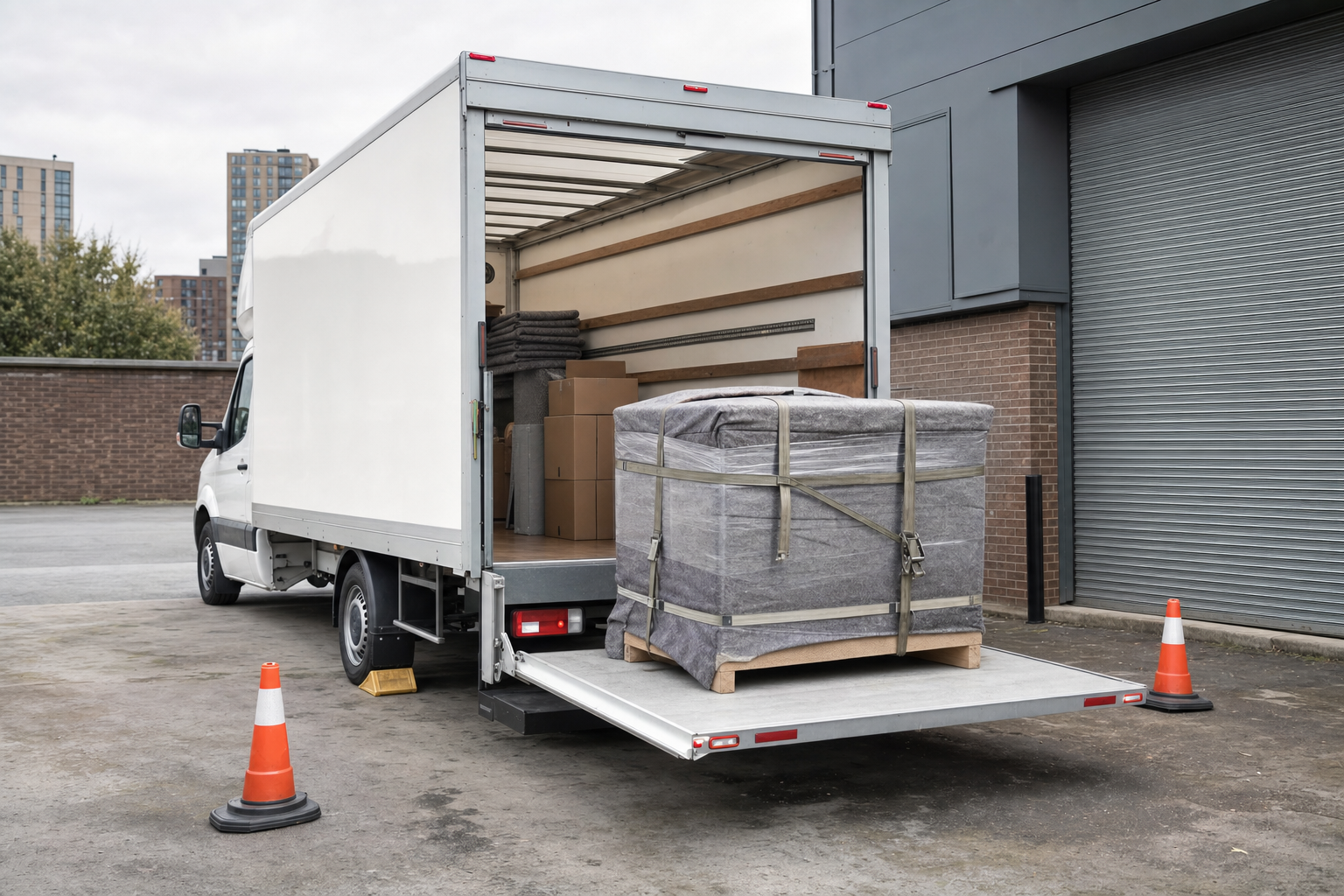
Why tail-lift removals need planning first
Better control for awkward loads
Heavy or bulky items can be raised more steadily when tail-lift use suits the job.
Vehicle space checked in advance
We need enough clear room behind the van to deploy the lift safely and properly.
Helpful for pianos and furniture
This capability links well with larger items that can be harder to load by standard means.
A tail lift helps where standard loading is less practical
Some items are simply harder to load by hand into a van because of their weight, size or shape. Tail-lift removals are useful when a heavy or awkward load needs to be raised between ground level and the van floor in a more controlled way. With J H Removals, we use this capability for suitable jobs where standard loading would be less practical or less steady. It can be especially helpful for items such as pianos, larger furniture and other difficult domestic belongings. The main point is planning: we need to know what the item is, how it is positioned and whether there is enough space for the van to operate safely where collection and delivery take place.
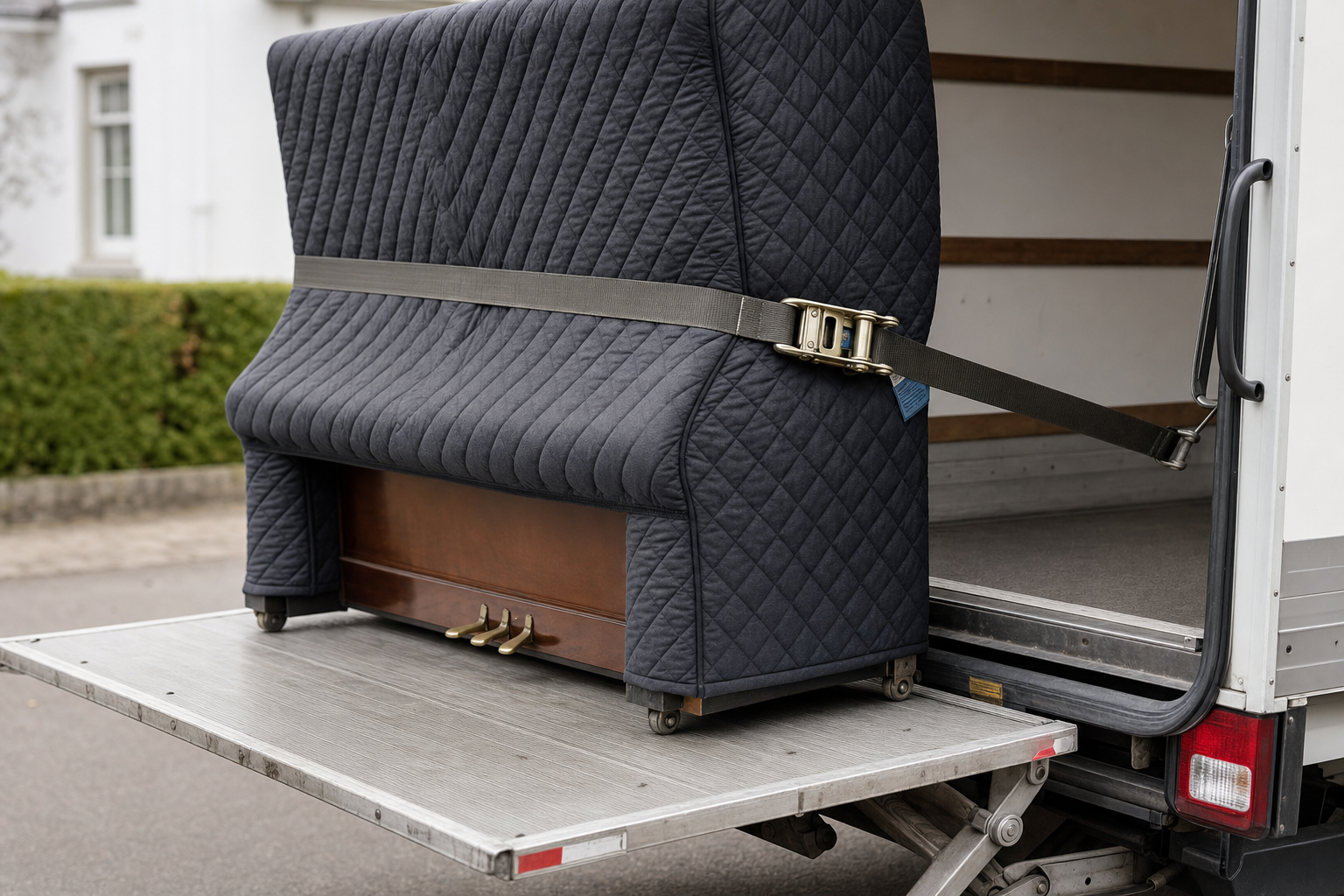
Space behind the van and clear item details matter
A tail lift only works properly if the vehicle can be positioned with enough clear space behind it and if the route to the loading point is workable. Slopes, steps, tight driveways and restricted parking can all affect that. When you contact J H Removals, please send item dimensions, approximate weight, photographs and details of any obstacles at either end of the move. That lets us decide whether a tail-lift approach is suitable and how to organise the job safely. Good information also helps us protect the item itself and avoid unnecessary handling changes once the van is already on site.
Frequently asked questions
What sort of items are tail lift removals good for?
They are useful for suitable heavy or awkward loads where raising the item between ground level and the van floor needs more control. Pianos, larger furniture and difficult domestic items are common examples, but we still need details and photos first to confirm whether the approach fits the job safely.
What access does a tail-lift move need?
The van needs a workable position and enough clear space behind it for the lift to operate. Restricted parking, narrow spaces, slopes or steps can all affect that. Telling us about those conditions early helps us decide whether tail-lift loading is practical at the property.
Why do you need measurements and photographs first?
They help us understand the load before the van arrives. Dimensions, approximate weight and clear photos show what is being moved and what the route looks like. That allows us to judge whether the tail lift is suitable, how the item should be handled and what space will be needed outside the property.